

Creative lighting can make a desk feel more inviting, give shelving greater depth, or add a soft glow behind a television. But a successful installation depends on more than choosing an attractive color. The light source, controller, power supply, mounting method, and surrounding surfaces all influence the result.
If you are considering BTF-LIGHTING, the most useful approach is to evaluate the products against a specific project rather than judge them by promotional images alone. This review focuses on that buying decision: what to look for, where creative LED lighting works well, and which technical details deserve attention before checkout.
Review scope: This is a buying-focused assessment, not a hands-on product test. Current BTF-LIGHTING specifications, prices, stock, warranty terms, and support performance have not been independently verified here. The lighting options discussed below are general product categories, not a confirmed inventory of the brand’s current range.
A Practical View of BTF-LIGHTING
The central question is whether the particular BTF-LIGHTING product you are considering fits your installation. A decorative accent behind furniture has different requirements from a kitchen work surface or a programmable display. Treating those projects as interchangeable can lead to disappointing brightness, unsuitable white light, or incompatible components.
For that reason, this is not an unconditional brand endorsement. BTF-LIGHTING is worth evaluating at the individual product level, with attention to documentation and system compatibility. An appealing listing becomes a credible purchase candidate when it clearly explains what is included, what additional equipment is needed, and how the components work together.
Choose the Lighting Effect Before the Product
Comfortable Everyday White Light
For shelves, workspaces, and practical illumination, start with the quality of the white light. Warm white generally creates a relaxed atmosphere, while cooler white can suit a brighter visual style. The best choice depends on the room, its finishes, and the lighting already installed.
Do not assume that a color-changing strip will provide the white light you want. White created by mixing colored channels can look different from light produced by dedicated white LEDs. If everyday white illumination is your priority, check the specific product’s white-light configuration, color temperature, and any documented color-rendering information.
Color for Mood and Decoration
Colored lighting works well when it supports the room rather than overwhelms it. A restrained accent behind a cabinet or along the back of a desk can be more effective than illuminating every visible edge.
For this kind of project, consider how easily the system lets you select a steady color and dim it comfortably. Elaborate effects are not necessarily an advantage if you mainly want a consistent evening setting.
Animated and Addressable Effects
Addressable lighting can support patterns in which sections or individual pixels behave differently. That makes it interesting for display shelves, decorative panels, and other projects where movement is part of the design.
However, addressable does not automatically mean that every LED is independently controlled. Pixel grouping and control behavior depend on the product. Confirm the supported protocol, voltage, controller compatibility, and actual control resolution before building a project around a particular effect.
The Product Details That Matter Most
Voltage and Power Requirements
A strip’s operating voltage must match the intended power supply. Voltage is not a brightness setting, and a physically compatible connector does not prove that two components are electrically compatible.
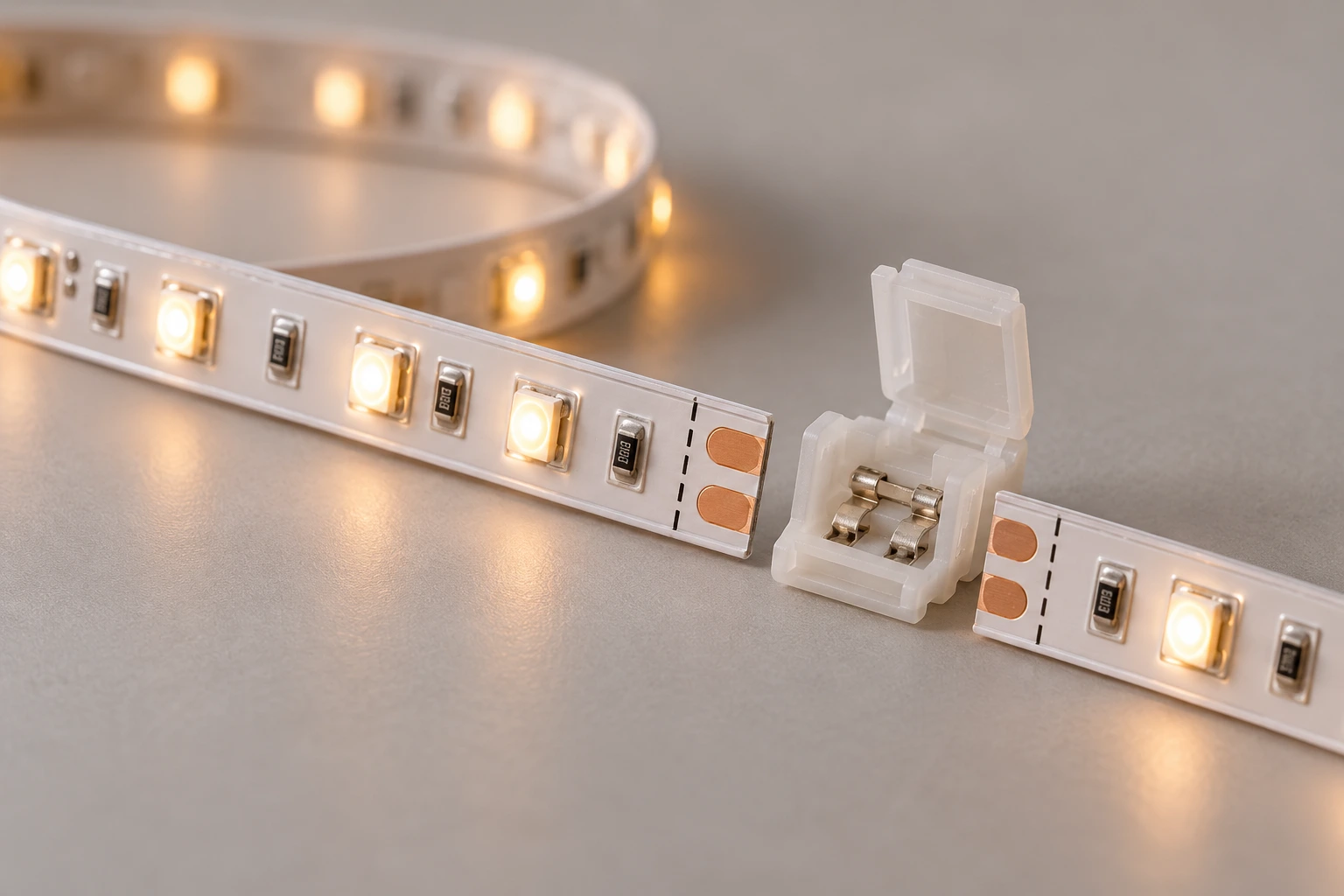
Calculate the load using the manufacturer’s stated power requirement and the length you intend to install. Follow the equipment maker’s guidance for supply capacity, wiring, ventilation, and any necessary power injection. Longer runs may need a different power-distribution approach from short accents.
Keep mains-voltage work separate from casual lighting experimentation. Follow applicable electrical rules and use a qualified professional when the installation requires one. Low-voltage strips still need appropriately rated wiring and connections.
Controller Compatibility
A controller must support the electrical and control requirements of the chosen lighting. A conventional color controller and an addressable controller are not interchangeable simply because both are advertised for LED strips.
Check connection diagrams, channel configuration, current limits, and supported control protocols. If phone or smart-home control matters, verify the exact integration, network requirements, and additional hardware involved. Do not infer compatibility from a generic wireless-control description.
Brightness and Light Distribution
LED density can affect how closely the individual light sources are spaced, but density alone does not establish brightness or visual quality. Output, spacing, diffuser design, mounting distance, and surface reflectivity work together.
When reviewing a BTF-LIGHTING listing, look for useful output and power information rather than relying exclusively on photographs. A strip that looks dramatic in a dark product image may behave quite differently in a room with daylight or overhead lighting.
Environmental Suitability
Lighting for a dry desk area has different requirements from lighting near splashes or outdoors. Verify the stated protection and installation limits for the specific product rather than assuming that a protective coating makes the entire system suitable for wet conditions.
Connections, cut ends, controllers, and power supplies also need appropriate protection. The suitability of one component does not establish the suitability of the complete installation.
Creative Projects Worth Planning Carefully
A Softer Desk Setup
Mounting lighting behind a desk can create a reflected glow without putting exposed LEDs directly in your line of sight. The wall becomes part of the effect, so its color and finish matter. A pale matte surface will reflect light differently from dark paint or glossy paneling.
Plan the controller location and cable route before attaching anything. A clean installation should make the desk easier to use, not introduce loose wiring around chair movement or monitor adjustments.
Display Shelves with Depth
Shelf lighting can highlight ceramics, books, collectibles, or textured objects. Positioning the source near the front underside of a shelf often creates a different result from placing it at the rear. Temporarily test both arrangements before committing.
A compatible channel and diffuser can help conceal the strip and soften visible points of light. They do not guarantee a perfectly continuous glow; the result still depends on LED spacing, diffuser depth, and viewing distance.
Television Backlighting
A restrained glow behind a television can make the surrounding area feel less stark. Keep the LEDs concealed and check for reflections on nearby glossy surfaces.
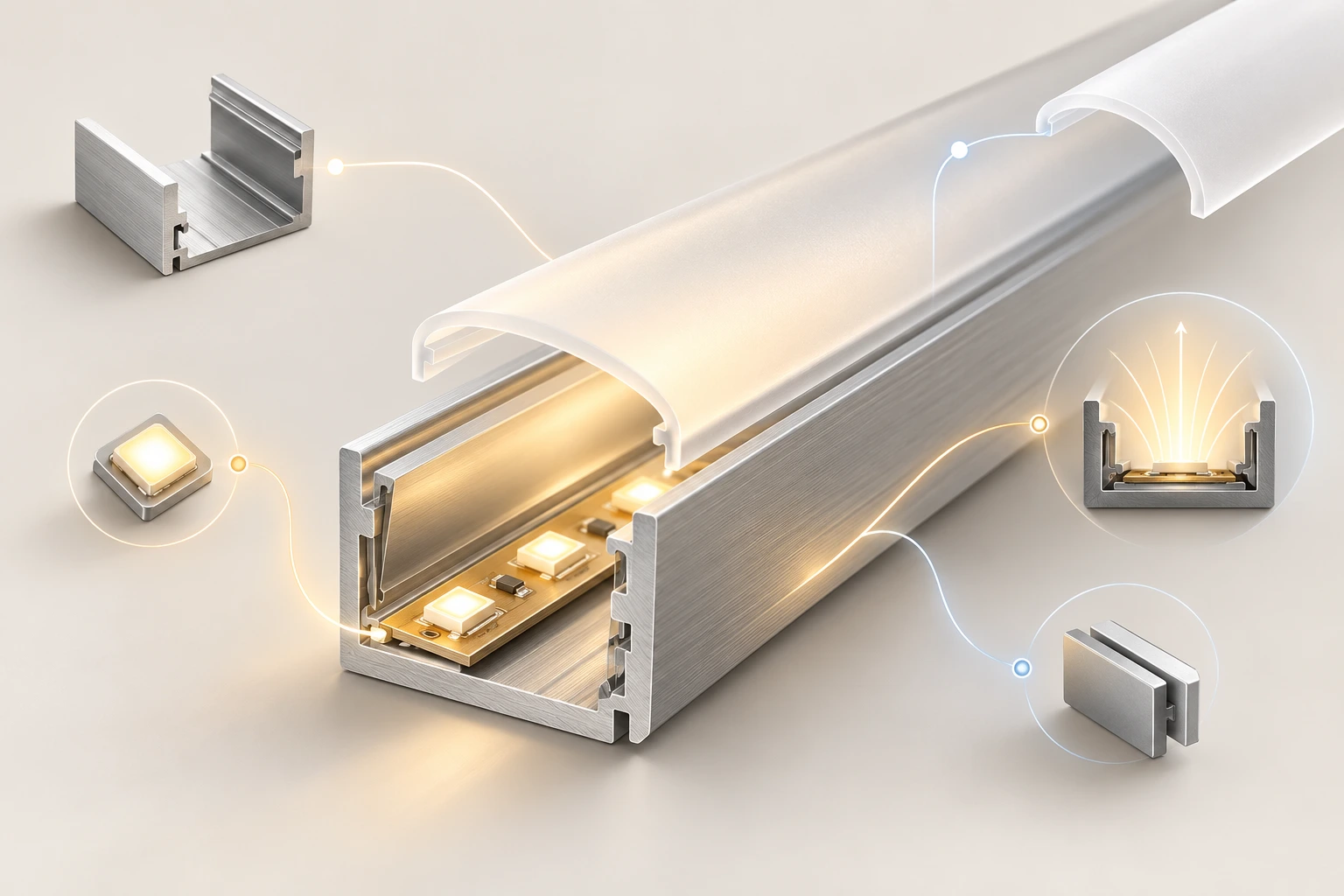
Basic backlighting is different from screen-synchronized lighting. Matching the colors on a display requires a compatible capture or synchronization system, not just a color-changing strip. Verify that complete setup separately if synchronization is your goal.
Decorative Wall Panels
Panels, recesses, and shallow frames offer opportunities for indirect lighting with a more architectural appearance. The strongest designs usually hide the hardware while leaving enough access for maintenance.
Prototype a small section first. Corners, diffusion, cable exits, and mounting depth are easier to adjust before the full installation is assembled.
What Realistic Product Photos Should Show
Attractive photography is useful for inspiration, but practical images should also reveal construction. Look for clear views of connectors, cut markings, labels, strip width, and any protective covering. Installation photographs are most informative when they show where the light source sits relative to the illuminated surface.
For a realistic impression of the finished effect, seek both illuminated and unilluminated views. Exposure and white balance can significantly change how bright or saturated LED lighting appears. A photograph is not a reliable measurement of output, color accuracy, or flicker.
If you document your own project, include the mounting channel, cable routing, and controller placement alongside the finished scene. Those details make a lighting review more useful than a sequence of dramatic dark-room images.
Strengths and Limitations of This Buying Approach
The appeal of component-based LED lighting is flexibility. A carefully matched setup can accommodate unusual dimensions, concealed mounting locations, and creative effects that a fixed-format lamp may not provide.
The trade-off is responsibility for the complete system. Choosing a strip is only part of the purchase. Power, control, mounting, connections, and maintenance access all need to be considered. These are characteristics of this lighting approach, not verified advantages or shortcomings of every BTF-LIGHTING product.
- Potentially a good fit: Buyers with a defined project who are comfortable checking specifications and assembling compatible components.
- Requires closer evaluation: Long runs, wet locations, precision white-light applications, and advanced automated effects.
- Potentially a poor fit: Buyers expecting any strip, controller, and power supply to work together without compatibility checks.
What to Verify Before Ordering
Before you explore BTF-LIGHTING for your project, prepare a short requirements list:
- The measured installation length, including corners and cable routes.
- The desired effect: practical white light, static color, or animation.
- The strip’s voltage, power requirement, dimensions, and permitted cutting points.
- The exact controller and power-supply requirements.
- Which accessories are included and which must be purchased separately.
- The mounting method, environmental conditions, and maintenance access.
- The current shipping, return, and warranty terms for your order.
If a critical specification is missing, seek clarification before purchasing. Clear documentation is more valuable than assuming an accessory will probably work.
Final Verdict
BTF-LIGHTING deserves a product-specific evaluation rather than a blanket recommendation based on attractive lighting effects. Without verified testing and current commercial details, it would be premature to declare the brand superior on reliability, value, or customer support.
The practical recommendation is straightforward: define the effect you want, select a product with adequate documentation, and verify the complete system before buying. For a creative installation, thoughtful placement and compatible components matter more than an impressive list of effects. Use the BTF-LIGHTING website to check the exact product details against that plan.