
A kitchen knife can look impressive in a product photograph and still be the wrong tool for your dinner routine. The more useful question is whether its shape, handle, maintenance requirements, and price make sense for the food you actually prepare.
That is the approach behind this Seido Knives review: a practical look at how to evaluate the brand’s products before buying, rather than treating attractive presentation as proof of performance.
Review scope: This is a research-limited buying assessment, not a hands-on test. Verified product specifications, current prices, purchase policies, and customer reviews were not provided for this article. Accordingly, it does not assign performance ratings, repeat unverified testimonials, or claim personal experience with Seido Knives products.
Disclosure: Links in this article may be affiliate links. If you purchase through them, the publisher may earn a commission.
Seido Knives at a Glance
If you are considering Seido Knives, start with the specific knife you intend to purchase rather than a general impression of the brand. Different blade designs serve different purposes, and a positive assessment of one product would not automatically establish the quality of every product carrying the same name.
You can explore the current Seido Knives range and evaluate each candidate against your cooking habits.
The central buying principle: choose a clearly specified tool that solves an everyday problem. A striking finish or an extensive bundle should be a secondary consideration.
Which Knife Would Earn Its Place in Your Kitchen?
The categories below are a framework for assessing any relevant Seido Knives listings you find, not a verified inventory of the brand’s current catalog.
An Everyday Prep Knife
For many home cooks, the most useful starting point is a versatile chef’s knife or another general-purpose kitchen knife. This is the tool likely to handle onions, herbs, vegetables, and boneless proteins.
Look at blade length, blade height, weight, and edge profile together. A curved cutting edge can accommodate a rocking motion, while a flatter profile may suit cooks who prefer push cuts. Neither approach is universally better; the right match depends on your technique.
Also consider your workspace. A long blade can feel cumbersome on a small board, and insufficient clearance beneath the handle can make chopping uncomfortable.
A Small Knife for Detailed Work
A smaller knife may be useful for trimming strawberries, peeling produce, or handling other tasks where a larger blade feels awkward. Its value comes from control, not from looking like a miniature version of your main knife.
If you already own a comfortable small knife that sharpens well, replacing it may offer less benefit than improving your primary prep knife.
A Specialist Blade or Knife Set
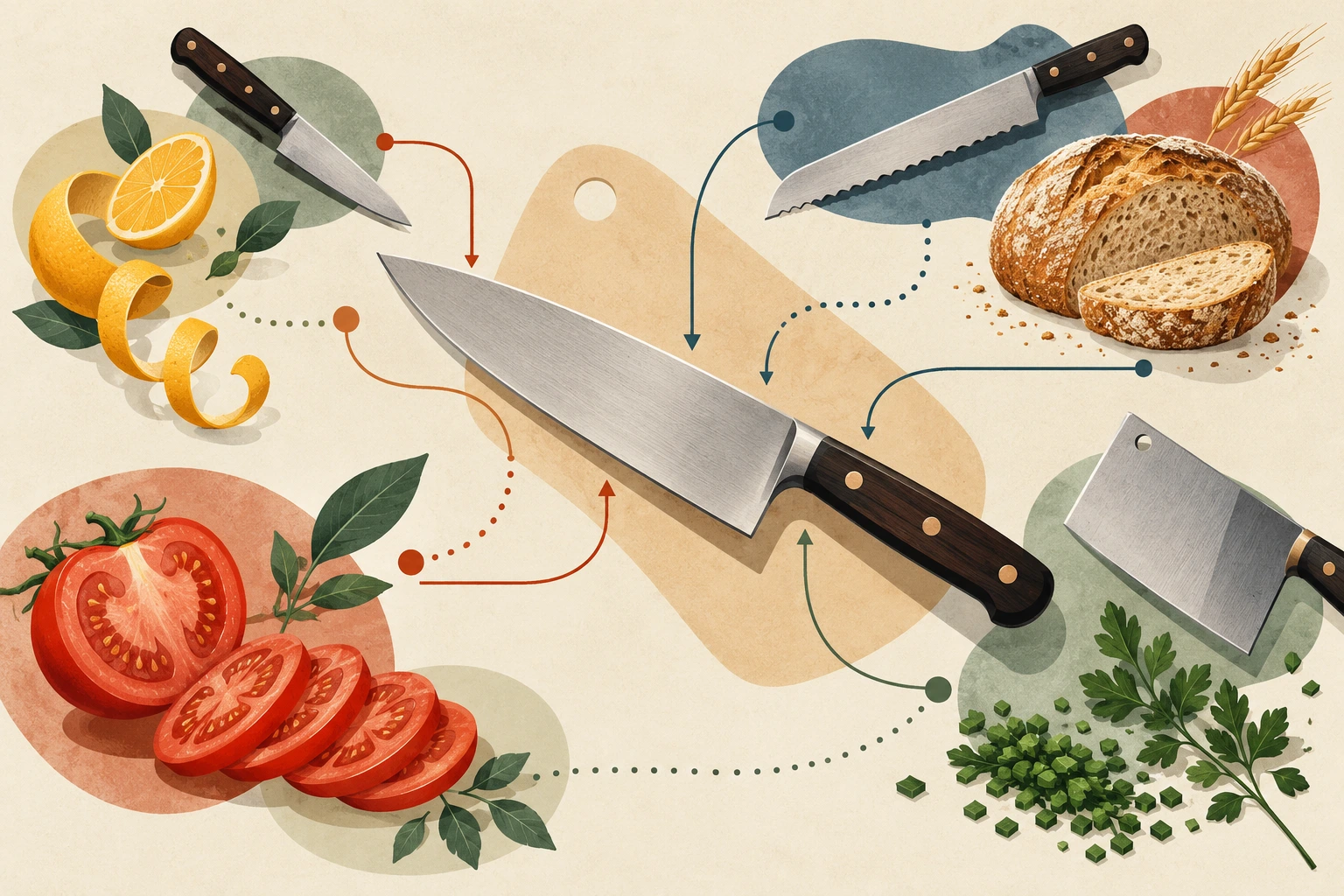
Specialist knives make sense when they address a task you perform regularly. A serrated bread knife, for example, serves a different purpose from a general-purpose prep blade.
With any set, write down what each included piece would do in your kitchen. Several similar blades can add storage and maintenance without meaningfully expanding your options. Judge a bundle by useful tools, not its total piece count.
How to Assess Seido Knives Product Specifications
Steel Information Should Be Specific
Look for an identifiable steel designation rather than relying on broad descriptions such as “premium steel.” Edge retention, corrosion resistance, toughness, and ease of sharpening depend on multiple factors, including heat treatment and blade geometry.
A hardness figure, if provided, is useful context but not a complete performance score. A harder blade is not automatically the best choice for every household, particularly if the knife may encounter twisting, rough handling, or unsuitable cutting surfaces.
If the listing leaves important questions unanswered, ask for clarification before ordering.
Blade Geometry Matters More Than Surface Decoration
Patterns and finishes can contribute to a knife’s appearance, but they do not establish how easily it cuts. Thickness behind the edge, taper, and overall blade shape influence how a knife moves through food.
For example, a blade may have a sharp edge yet still wedge noticeably in dense vegetables. Conversely, thin geometry can improve slicing while requiring more careful use. Product photographs alone rarely settle these questions.
Do not infer manufacturing origin, steel composition, or construction method from decorative patterns or Japanese-inspired terminology.
Handle Comfort Is Personal
A handle that suits one cook may feel slippery, bulky, or restrictive to another. Material descriptions help, but shape, dimensions, balance, and transitions between the blade and handle also matter.
If you use a pinch grip, pay attention to the area where your fingers contact the blade and handle. If you usually hold the handle fully, its contour and usable length may be more important to you.
Because comfort is difficult to judge online, a clearly explained return policy can be more valuable than another attractive lifestyle photograph.
What Consumer Feedback Can—and Cannot—Tell You
No verified consumer reviews were available in the supplied material. It would therefore be misleading to include customer quotations, claim that buyers consistently praise a particular feature, or describe a recurring complaint about Seido Knives.
When you read customer feedback yourself, prioritize comments that describe a specific product and explain how it has been used. The following are useful topics to look for, not reported customer findings:
- Performance after repeated cooking sessions: Does the reviewer discuss continued use rather than only first impressions?
- Comfort during extended prep: Do they identify their grip, hand comfort, or any pressure points?
- Maintenance experience: Have they sharpened the knife, and do they explain the method?
- Food-specific observations: Do they describe cutting tomatoes, onions, bread, or other identifiable ingredients?
- Service and delivery: Is the feedback about the knife itself, shipping, or a return request?
Delivery satisfaction is useful information, but it does not establish edge retention. Similarly, a report of damage needs context about use and care. Look for detailed, independent accounts that agree on a specific model rather than assuming a star average tells the whole story.
Use Real Product Photography as Evidence, Not Proof
Authentic product photographs can help you assess proportions, handle contours, blade markings, and what is included in a purchase. Look for several angles and close-ups rather than relying on a single dramatic image.
Brand photographs can document appearance; customer photographs may add context about scale and wear. Neither replaces reliable specifications or actual cutting tests. An image also cannot confirm long-term durability or manufacturing origin on its own.
For this review, no verified product photographs or image permissions were supplied. No generated images are presented as real Seido Knives products.
Price and Value: Compare the Whole Purchase
Without verified current pricing, there is no sound basis for calling Seido Knives a bargain, a premium-value purchase, or an overpriced option. Value needs to be assessed at the level of the exact product and final checkout cost.
Before buying, check:
- The final price, including shipping and applicable taxes.
- The exact items, dimensions, and materials included.
- The return window and whether use affects eligibility.
- Return shipping costs and any other stated deductions.
- Warranty coverage, exclusions, and the claim process.
- Any additional storage or sharpening equipment you will need.
A prominent discount is not enough to establish value. Compare the product’s actual specifications and ownership costs with similarly equipped alternatives, rather than treating a crossed-out reference price as the deciding factor.
Care Requirements Should Fit Your Routine
Follow the instructions supplied with the specific knife. As general kitchen-knife care, hand-washing, prompt drying, suitable cutting boards, and protected storage help reduce avoidable damage.
Avoid using a general-purpose kitchen knife to pry, twist through hard material, or cut frozen food unless the manufacturer explicitly identifies it as suitable. Keep edges from knocking against loose utensils in a drawer.
Sharpening also deserves a plan. Honing and sharpening are not interchangeable, and the appropriate tools depend on the blade. If you do not want to maintain an edge yourself, factor professional sharpening into the purchase decision.
Our Verdict on Seido Knives
Seido Knives warrants a product-by-product assessment, not an unconditional recommendation based on appearance or brand presentation. The information available here does not support a claim about tested cutting performance, durability, customer satisfaction, or comparative value.
A sensible purchase would require a specific model with clear specifications, a shape suited to your cooking, acceptable care requirements, and purchase terms you understand. If those details remain unclear, waiting or asking questions is the stronger decision.
The best upgrade is not necessarily the largest set or the most visually distinctive blade. It is the knife that makes your most frequent kitchen task easier without creating maintenance or spending you did not want.
Check Seido Knives product details and current purchase terms, then choose according to your kitchen—not just the photograph.