

Great LED lighting does more than add color to a room. It can soften the wall behind a monitor, make shelving feel intentional, or turn a dark countertop into a more usable workspace. The challenge is that a good result depends on a complete system—not just an attractive strip of lights.
BTF-LIGHTING is a brand worth evaluating if you are shopping for LED lighting components and want to make an informed choice about your setup. The most useful question is not simply whether the brand is good, but whether a particular product fits your space, power requirements, controls, and installation skills.
This buyer-focused review is not based on hands-on testing. It does not establish the performance, durability, or specifications of any particular BTF-LIGHTING product. Instead, it explains what to assess before buying and where an otherwise promising lighting project can go wrong.
BTF-LIGHTING at a Glance
For an LED lighting purchase, brand recognition is only a starting point. Your experience will depend heavily on the exact item you select and the components used with it. Two strips that look similar in a product photo may need different power supplies, controllers, or installation methods.
When exploring BTF-LIGHTING’s website, treat each product listing as a technical purchasing decision rather than assuming that everything under the same brand works together. Confirm what is included, what must be purchased separately, and which compatibility details are explicitly documented.
- Most relevant to: shoppers willing to compare specifications and plan an LED installation.
- Main decision factor: whether the selected lighting, power supply, and controller form a compatible system.
- Main purchasing risk: choosing by appearance while overlooking electrical or control requirements.
- Important limitation: this review does not verify current stock, pricing, shipping terms, warranty coverage, or individual product performance.
Start With the Lighting Effect, Not the Product Name
Before comparing products, decide what the light should actually do. Decorative backlighting, practical task lighting, and animated displays serve different purposes. Choosing the effect first helps narrow the technical requirements and prevents paying for capabilities you will not use.
Ambient Lighting That Stays in the Background
For a television wall, floating shelf, or bed frame, subtlety often produces a better result than maximum brightness. Hidden placement, comfortable dimming, and a smooth reflection across a surface matter more than dramatic product photography.
Think about where the strip will be visible from a seated position. A light source that looks attractive from across the room may become distracting when individual LEDs are directly in view.
Task Lighting That Makes a Space More Useful
Under-cabinet and workbench lighting need a different approach. Prioritize suitable white light, usable brightness, and consistent illumination. If color accuracy matters for cooking, crafts, or product photography, look for a clearly stated color rendering specification on the exact product.
Do not assume that a color-changing strip will provide the quality of white light you want. Dedicated white LEDs and mixed-color white can produce noticeably different results.
Decorative Effects With More Control
If you want moving patterns or different colors along the same strip, check whether the chosen product supports independently controlled sections or pixels. A strip that changes color as one continuous unit is not equivalent to an addressable design.
Also check the level of control available. Individually controlled LEDs and groups of LEDs controlled together can create different visual effects, even when listings use similar language.
The Compatibility Details That Matter Most
The strongest basis for recommending any specific BTF-LIGHTING purchase would be a clear match between the product specifications and your project. These checks are more meaningful than a broad brand-level rating.
Match the Supply Voltage
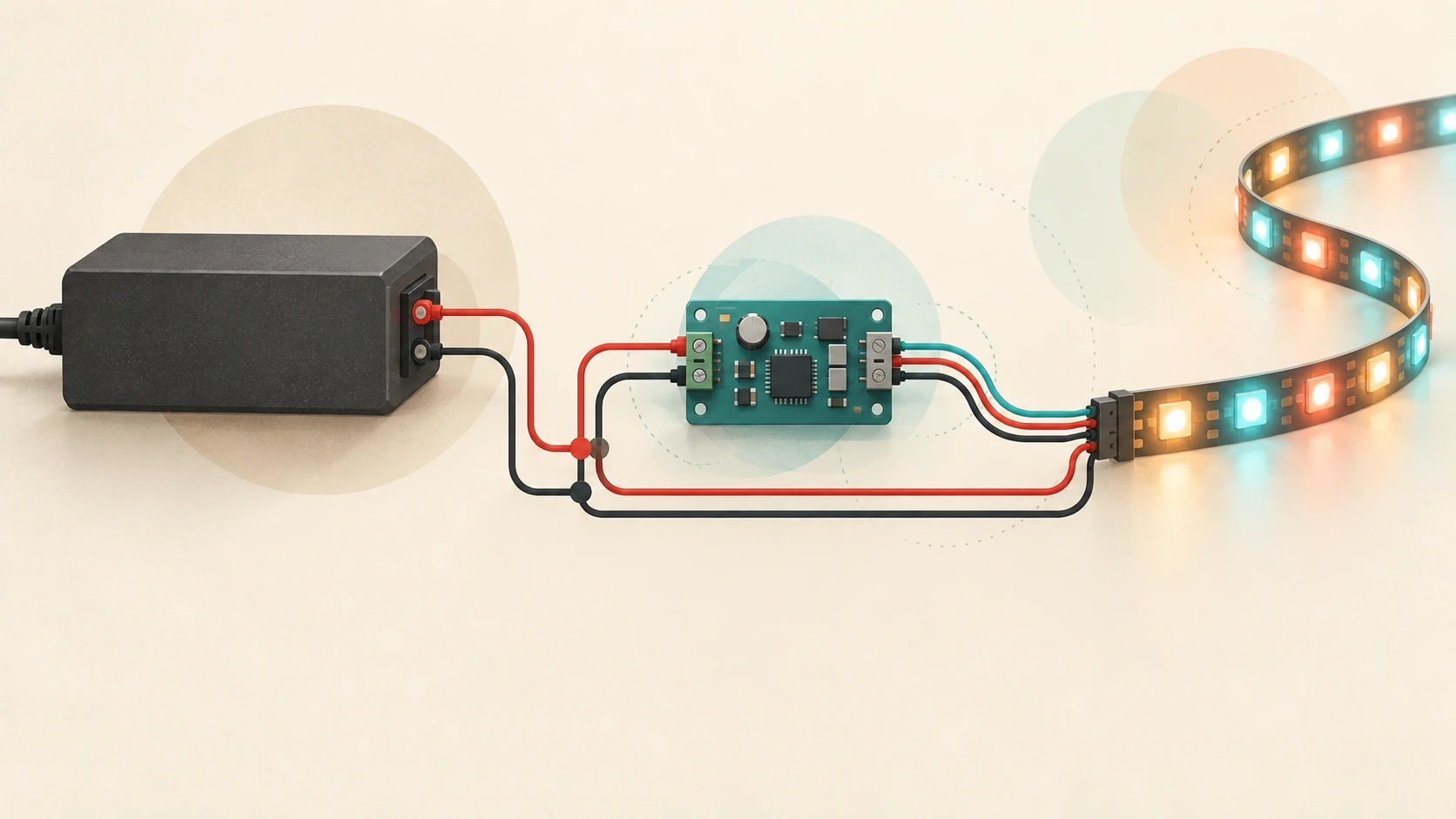
The power supply must match the voltage required by the selected strip and any connected equipment. A similar connector does not establish compatibility, and using the wrong voltage can damage components or create a safety risk.
Voltage also affects installation planning. Longer runs can experience voltage drop, which may appear as dimming or inconsistent color toward the far end. The appropriate solution depends on the product and wiring layout; do not assume a larger power supply alone will fix it.
Understand the Control Method
Controllers are not universally interchangeable. A conventional color-changing strip and a digitally addressable strip can require fundamentally different control systems. Even within addressable lighting, the supported signal protocol matters.
Check the product’s control requirements, the controller’s supported outputs, and any limits on strip length or pixel count. If a listing mentions a particular chip or protocol, use that information to confirm compatibility rather than relying on matching connector shapes.
Calculate Power for the Actual Installation
Base power planning on the documented consumption of the selected strip and the length you intend to install. Follow the equipment manufacturer’s guidance for power-supply sizing and operating headroom.
For longer or more demanding installations, power distribution may require additional planning. Cable sizing, connection quality, and protective measures matter alongside the supply’s rated output. Seek qualified help if the project involves mains wiring or exceeds your electrical experience.
Lighting Quality Is About More Than Brightness
Online images can show a possible lighting effect, but they cannot reliably tell you how a product will look in your room. Camera exposure, wall color, reflections, and image editing all influence the impression.
Choose White Light Intentionally
Warm white can create a relaxed atmosphere, while a more neutral white may suit practical work areas. The right choice depends on the room and the existing lighting. Mixing noticeably different white tones within one small space can make an otherwise tidy installation feel inconsistent.
If adjustable white is important, verify that the exact product supports it and that the intended controller can operate that function.
Plan for Visible Dots and Diffusion
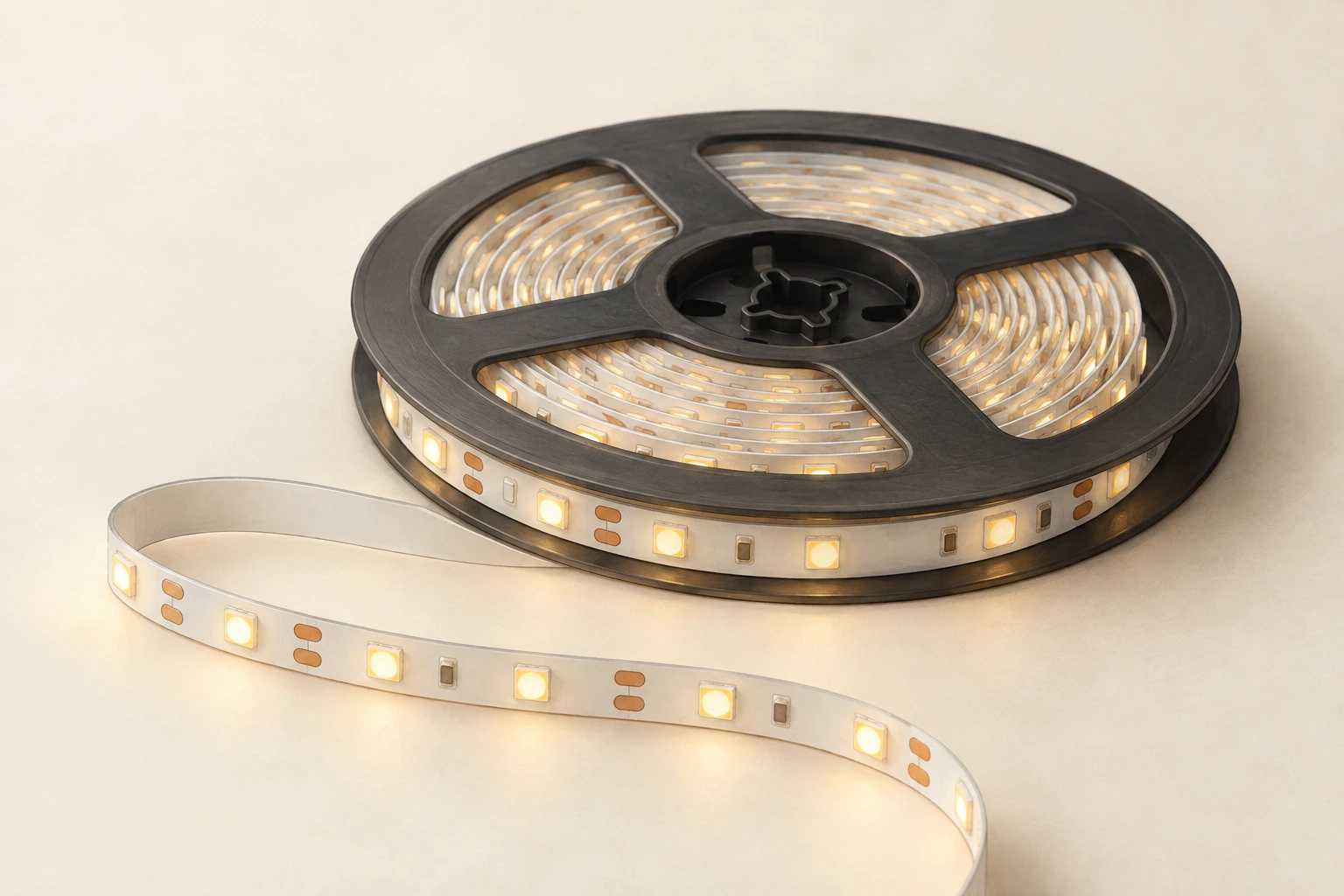
Closely spaced light sources can help create a more continuous appearance, but spacing is only part of the picture. The distance between the LEDs and the diffuser, the diffuser material, and the viewing angle all affect whether individual points remain visible.
A mounting channel with a suitable diffuser may improve the finish. It can also support mounting and heat management when appropriately selected, but it should not be treated as a guarantee of a dot-free appearance or adequate cooling.
Consider Dimming in Everyday Use
A lighting setup that looks impressive at full output may feel too intense in the evening. Check how the selected controller handles dimming, whether it retains your preferred settings, and whether any documented limitations affect low-brightness operation.
These are product-specific questions. Without testing the exact combination, it would be misleading to promise smooth dimming, silent operation, or flicker-free performance.
Installation Can Make or Break the Result
Before ordering, sketch the route the lighting will follow. Mark corners, cable exits, power-supply placement, and accessible connection points. Measure the usable mounting area rather than just the overall width of the furniture or wall.
- Check cutting locations: strips must be cut only where the product permits.
- Confirm physical dimensions: strip width, connectors, and protective coverings must fit the intended channel or space.
- Prepare the surface: follow mounting guidance and do not assume adhesive alone suits every material or orientation.
- Leave access: avoid sealing power supplies and controllers inside inaccessible spaces.
- Manage heat: provide the mounting conditions and ventilation specified for the equipment.
- Test before final mounting: verify the complete system before committing to a permanent installation.
For damp or outdoor locations, assess the whole system. A protected strip does not automatically make its connectors, cut ends, controller, or power supply suitable for moisture exposure. Check the stated environmental requirements of every component.
How to Judge BTF-LIGHTING’s Value
Without verified current prices and like-for-like testing, there is no sound basis for calling BTF-LIGHTING the cheapest, best-performing, or best-value option. A more useful approach is to compare the total cost of achieving your intended result.
Include the strip, controller, power supply, connectors, cable, mounting materials, and any diffuser channels. Also consider whether you need tools or professional installation. A lower strip price may not translate into a lower finished-project cost.
Documentation matters too. Clearly stated electrical requirements, compatible control methods, dimensions, and installation instructions reduce uncertainty. If a critical specification is missing, clarify it before ordering rather than filling the gap with assumptions.
Who Should Consider BTF-LIGHTING?
BTF-LIGHTING is most relevant to shoppers who are comfortable evaluating the exact components their project needs. If you enjoy planning a custom shelf, desk, or accent-lighting installation, a specification-led approach can help you make a more confident selection.
If you want a simple, ready-to-use experience, focus on whether the exact listing explicitly includes all necessary parts and provides clear setup instructions. Do not assume a strip-only purchase is a complete kit or that wireless control is included.
For projects requiring dependable color matching, integration with an existing automation system, or demanding environmental protection, request product-specific confirmation before committing. Brand-level impressions are not enough for these requirements.
The Verdict: Buy the System, Not Just the Strip
BTF-LIGHTING deserves consideration through the lens of your specific project, not an unsupported blanket recommendation. The key purchasing criteria are compatible power and controls, appropriate light output, clear documentation, and an installation plan that accounts for mounting and heat.
The best starting point is a simple brief: where the light will go, what effect you want, how much length you need, and how you want to control it. Then explore BTF-LIGHTING with your project checklist in hand and compare the relevant product details.
A successful LED installation should feel effortless once it is finished. Getting there usually depends on the careful decisions made before the lights are switched on.